Have you ever booked a hotel room just because the website said, “Only 1 room left at this price!”? You didn’t do that because you were logical. You did it because of a biological trigger called Loss Aversion.
In psychology, “Loss Aversion” refers to the fact that the pain of losing out on something is psychologically twice as powerful as the pleasure of gaining it.
For Shopify merchants, understanding this trigger is the key to unlocking higher conversion rates without spending more on ads.
The “Scarcity” Heuristic
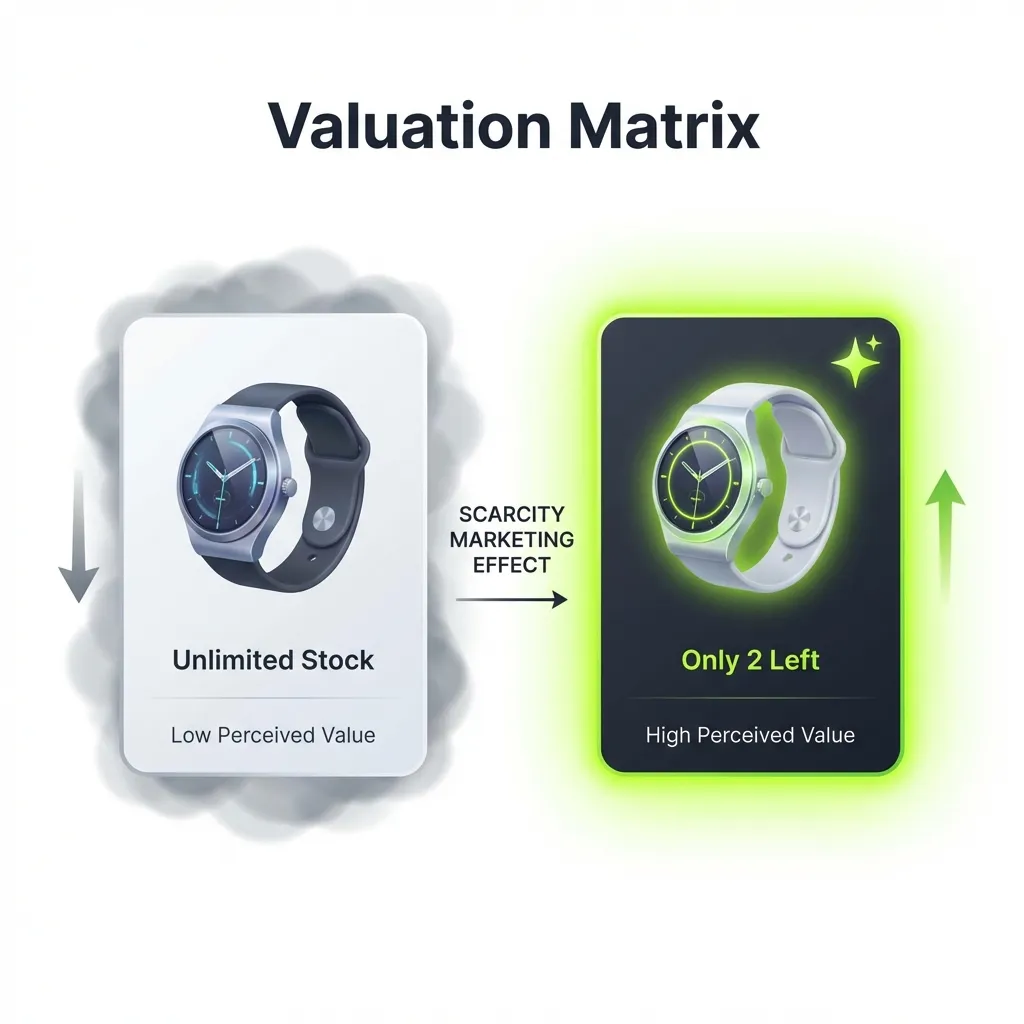
When a product is abundant, we delay the decision. We think, “I’ll buy it later.” When a product is scarce, our brain shifts into survival mode. We think, “I must buy it now or I will lose it forever.”
This is why Stock Countdown tools are so effective.
The Statistic: Real-time social proof and scarcity notifications can boost conversions by up to 98%.
How to use it: Don’t just say “In Stock.” Use FomoGen to display a dynamic counter: “Hurry! Only 3 items left in stock.”
Social Validation: The “Safety in Numbers” Effect
Humans are herd animals. We look to others to determine what is safe and correct. This is called Social Proof. If a visitor lands on your store and sees zero activity, they feel “checkout anxiety.” Is this a scam? Will it ship?
By displaying a Sales Pop that says “Amanda from Texas purchased this 2 minutes ago,” you provide external validation. You are telling the visitor’s subconscious: “Others are buying this. It is safe. You should join them.”
The Ethics of FOMO
Warning: Fake scarcity destroys trust. In 2026, consumers are smart. If you show a countdown timer that resets every time the page refreshes, they will know you are lying.
- The Right Way: Use tools that sync with your actual Shopify inventory.
- The Wrong Way: Using “Fake” counters that always show “3 left” even when you have 1,000 units.
The Science of Psychological ROI
Understand how FOMO fits into a broader E-commerce Performance strategy.
Summary
You don’t need to manipulate customers. You just need to surface the truth. If your stock is low, tell them. If people are buying, show them. That is the essence of high-converting ethical marketing.
Recommended Next: Pair FOMO psychology with the right UX. See how a Mobile Sticky Cart can boost your conversion funnel.