For a long time, I thought “Monk Mode” was just about being tougher. I told myself that if I just wanted it enough, I could stop checking my phone. But I kept failing. I’d be in the middle of a big project, and without even thinking, my thumb would already be opening an app.
I realized I wasn’t fighting a lack of discipline; I was fighting a latency problem.
The 20ms Secret: Why Your Thumb is Faster Than Your Brain
Here is the simple truth I found: human willpower is slow. By the time your conscious brain says, “Hey, don’t open that,” your habit has already won. Social media algorithms are built to load content in milliseconds—faster than you can even decide to stop.
I spent years trying “soft” wellness apps like Opal and Freedom to help me, but they didn’t work for my “power user” needs:
- The Cost: Opal was incredibly expensive, charging up to $99 a year just to help me stay focused.
- The Clunkiness: Freedom felt like a desktop app that didn’t quite fit my Android phone, making it frustrating to use.
- The Privacy Red Flags: Some apps used a VPN to block traffic, which made me worry about my data being routed through their servers.
See the full breakdown: Our comparison matrix shows exactly how MindfulGuard stacks up against the competition.
Building a “Cognitive Firewall”
I decided to stop treating focus like a “feeling” and started treating it like engineering. I wanted to build a system that was faster than my own impulses—a “Cognitive Firewall” for my brain.
That is how MindfulGuard was born. I didn’t want it to just be another timer; I wanted it to be a piece of infrastructure that actually worked on aggressive Android phones (like Xiaomi or Samsung) without being killed by the battery settings.
The Three Rules of Monk Mode 2.0
To make my Monk Mode stick, I built three specific features into the app:
- Strict Logic Mode: No “5 more minutes” button. Once the block is on, it’s a hard wall that willpower can’t break.
- Zero-Telemetry Privacy: I’m a developer, so I’m obsessed with privacy. My app works offline-first, meaning your usage data stays on your phone, not in a cloud.
- Friction Training: Sometimes you just need a pause. We add a few seconds of breathing or a delay to break the “dopamine loop” before it starts.
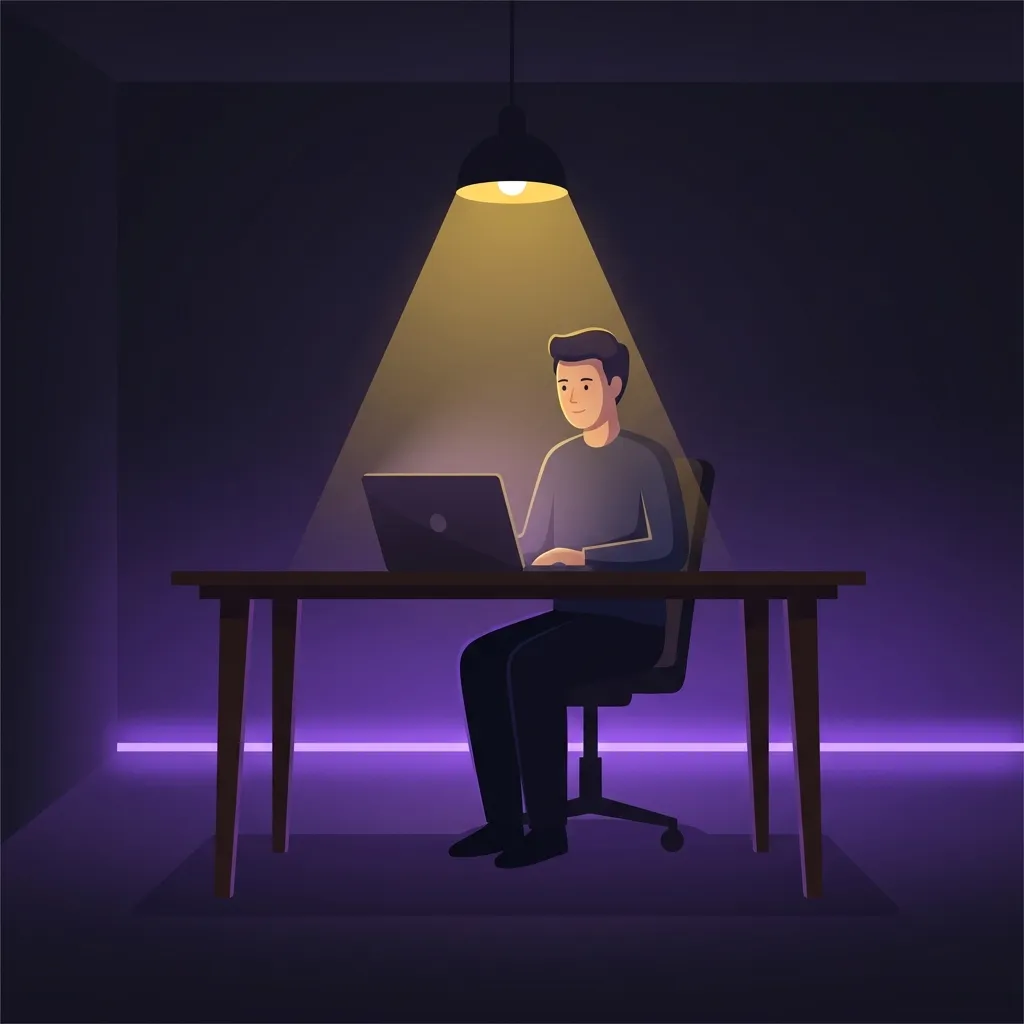
The Result: Reclaiming My Day
Since I started using this “logic-based” approach, I’ve reclaimed about 2.4 hours every day. I stopped feeling guilty about my lack of willpower because I finally had a tool that was faster than my distractions.
Stop trying to fight a super-computer with your bare hands. It’s time to deploy a system that actually works.
Master Your Neural Architecture
This article is part of our Ultimate Guide to Digital Wellness. Explore the full pillar for more insights on monk mode and focus engineering.
Ready to enter Monk Mode 2.0?